The continued recovery in cargo volumes and strategic acquisition of Pinnacle Logistics helped Worldwide Flight Services (WFS) beat pre-pandemic revenues in the third quarter. The cargo handling provider survived the pandemic through the extensive use of the US CARES payroll, which provided €83.3m in the first half of the year, but support ended in Q3. WFS used the remaining €22.7m of Payroll Support Program (PSP) grants in the latest quarter, leaving the company to fend for itself at a time when labor cost inflation is on the rise and regions begin to re-enter lockdowns.
The air freight industry is straining under the twin pressures of high demand and disruption from lower capacity & labour shortages. Unemployment benefit schemes in the US have disincentivized staff to return to work, leading to labor shortages at WFS North America operations. Management explained that they've had to increase costs to retain and recruit staff, which has had an overall negative impact on field contribution margins versus 2019. When quizzed, CEO Craig Smith, explained they are able to include wage inflation pass-throughs into contracts, however these need to be negotiated and may sometimes be forgiven for the first couple of years of the contract.
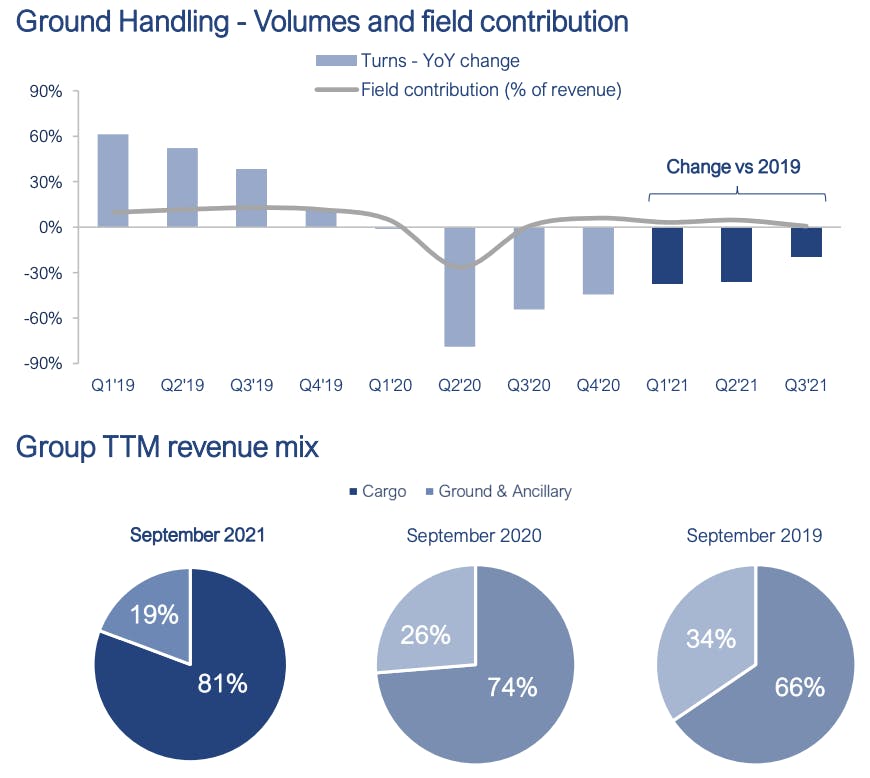
The Delta variant is also a cause for concern, with air passenger transport remaining impacted. Although IATA reported that air passenger traffic improved in Q3 (54.2% decline vs 2019) compared to Q2 (62.7% decline), air travel was still 53.4% below pre-crisis levels in September. This ongoing threat is set to impact the Ground & Ancillary segment, which represented ~19% of LTM revenues, especially in their EMEAA region which had already seen a €19.2m decrease in revenues compared to the same nine-month period last year. This decline was mainly due to Covid-driven air travel restrictions throughout Europe and Asia, but discontinued ground handling operations at CDG (Paris Charles de Gaulle) and Birmingham airports also played a part.
Cargo Manifests
It is important to note that WFS have made the strategic decision to concentrate on the expansion of their cargo business. Management stated in today's (24 November) earnings call that they will continue to focus their M&A strategy on cargo bolt-on acquisitions, with financing options dependent on the size of the business.
On 24 September, WFS completed the acquisition of Pinnacle Logistics, which allows them to capture e-commerce cargo handling business - the fastest growing segment in air freight. Pinnacle already serves customers across nine airports and delivered €84m of revenue and €11.7m of Adjusted EBITDA for the LTM period. "The acquisition of Pinnacle Logistics enhances our core cargo and express cargo handling value proposition to customers, and Pinnacle's established trucking logistics business further expands our service offering," Michael Simpson, WFS' executive vice president of the Americas, said in a statement. According to management, the business combination makes them the largest air cargo customer to Amazon.
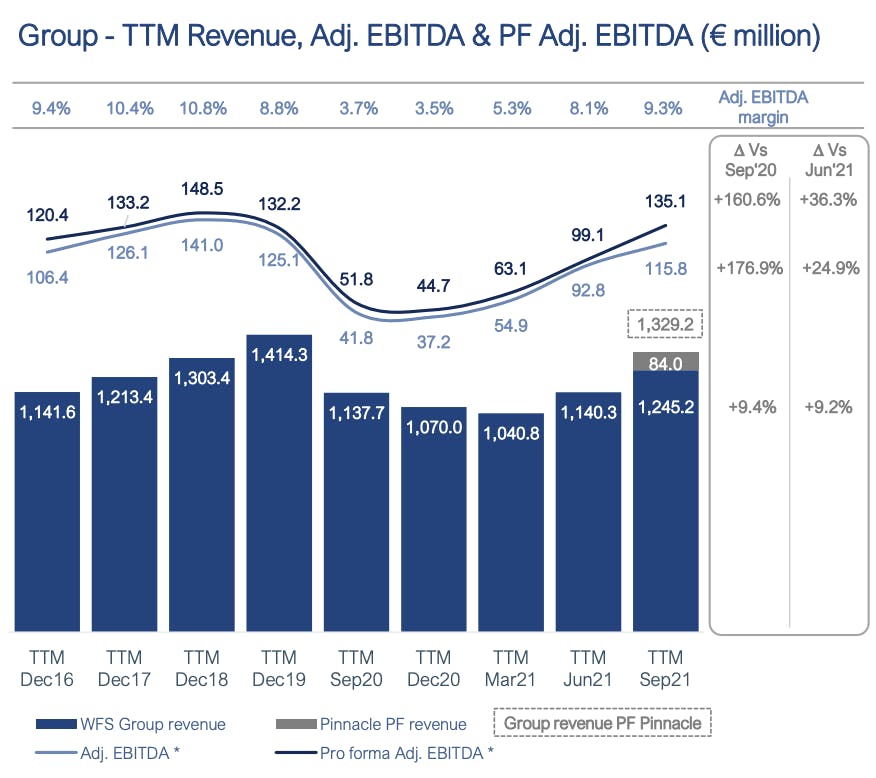
The €75m purchase price was financed by cash on the balance sheet (€49m) and revolver drawings (€26m), which may be refinanced using senior secured debt in the future. This financing lowered their liquidity to €212.7m from €286.5m in Q2. Nonetheless, management remained confident that they have adequate liquidity levels to support ongoing revenue growth. The super-senior RCF minimum liquidity covenant of €50m ended in September, providing the company with additional leeway, even with the reinstated 8.25x Net Senior Secured Leverage covenant. Net Senior Secured leverage dropped to 3.86x in Q3 from 4.65x in Q2.
However, management declined to comment on any ongoing refinancing options of their capital structure. The group currently holds €400m SSNs and €260m SSFRNs – both set to mature in August 2023 – and a SSRCF due April 2023. The notes have recovered from sub 50’s during the height of the pandemic (April 2020), and have hovered below par since April of this year. The SSNs currently yield around 7%, compared to 5.25% immediately after the Q2 results release in September. The redemption premium for the fixed notes steps down to par, from a 101.69 call premium, in August 2022.
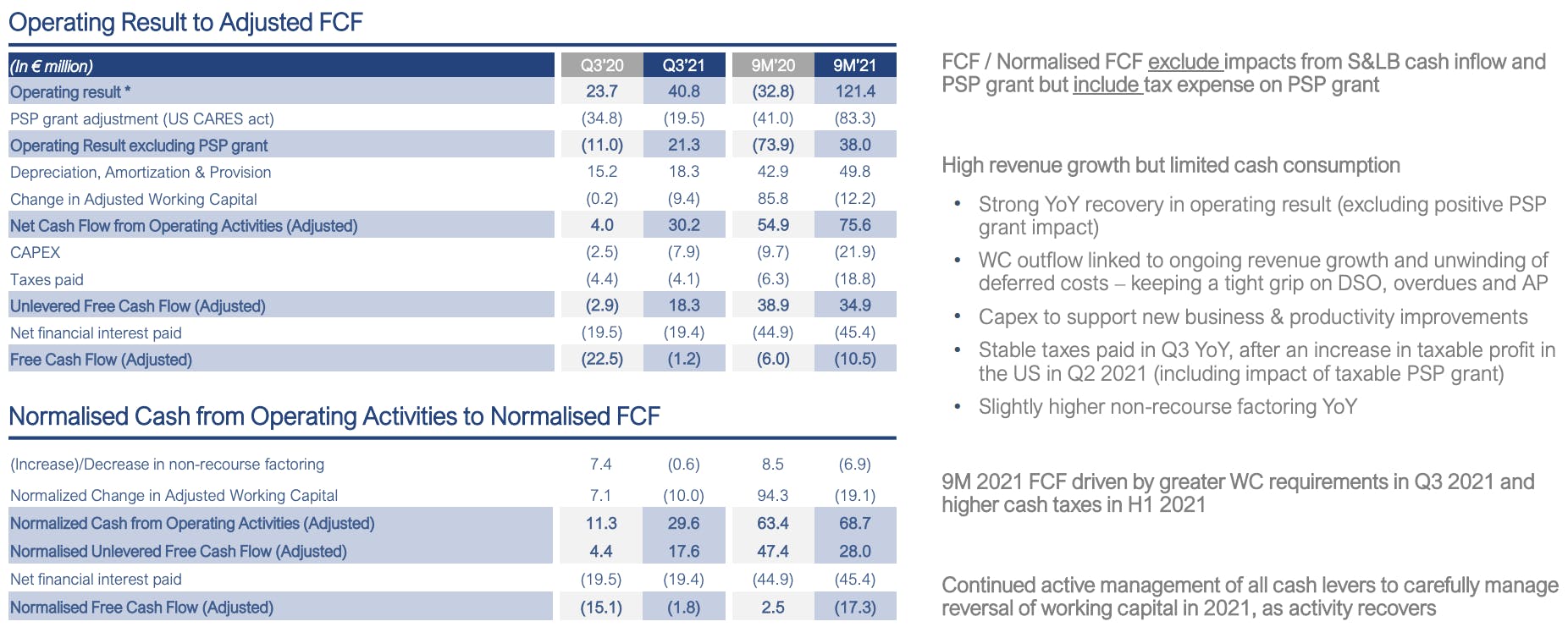
Cash generation is also a point of concern. WFS accelerated capex into Q3, and a €45m interest bill YTD has hampered their already limited track record of generating positive free cash flow. Management agreed there is ‘still a lot of work to do here’, but explained higher taxes in Q2 and an increase in working capital requirements have negatively impacted their FCF generation YTD. Moody’s expects negative FCF over the next 12-18 months, however productivity improvement initiatives, a decrease in non-recurring costs and strong WC management could enable WFS to turn FCF positive in 2023.