It’s been a week of high drama on the pitch in Germany and on, and even around, the Wimbledon tennis courts. You could be forgiven if your focus hasn’t solely been on the distressed market.
Coming into this week, we expected to hear more on Thames Water, as UK water regulator Ofwat was due to publish preliminary determinations on how much water companies could raise prices by on Thursday (11 July), which had the potential to unlock much needed investment in the sector. But there’s also been some surprising (though not entirely unexpected) news around Peach Property Group and OQ Chemicals, and somewhat predictable news around Intrum.
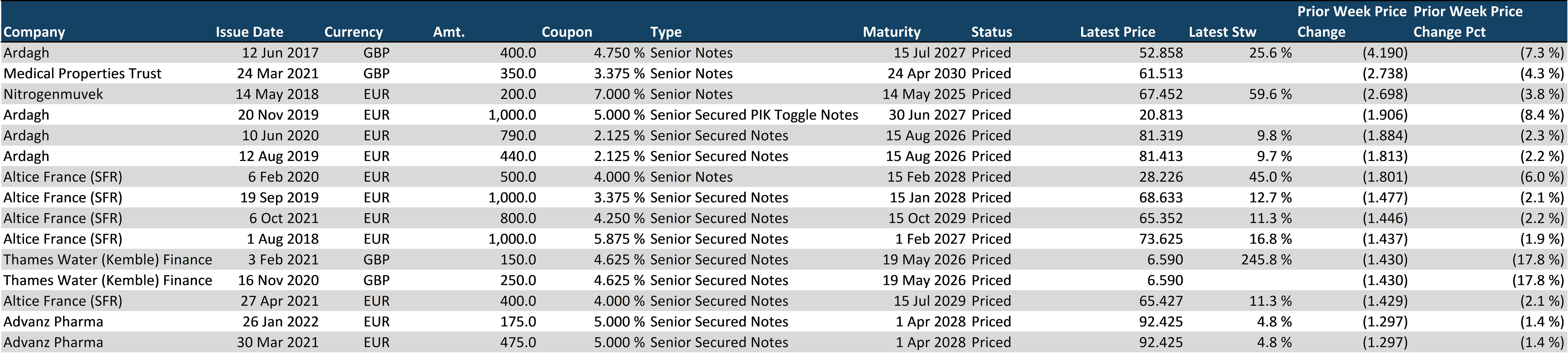
Home, there’s no place like it… Unless you live near the Thames. Thames Water had asked the regulator to green-light a 44% increase to customer bills that would see the average annual bill rise to £608 by 2029, as reported. That increase would allow Thames to fund a £19.8bn infrastructure improvement programme and tackle its dizzying £15bn debt pile. The company has said it has enough liquidity to cover 11 months of operations, but will require a £750m equity injection by April and a further £2.5bn by 2030.
Thames Water shareholders already backed away from plans to inject further equity into the embattled utility company in March, and Thames said that feedback from Ofwat did not constitute an “investible proposition”.
Ofwat allowed Thames to increase bills by £99 and placed the company in a “Turnaround Oversight Regime”, which binds Thames to a set of environmental targets and grants the regulator access to extra information from the company. The regulator also threatened to slap Thames with a £141m fine if the group failed to improve is 2025-30 business plan.
Thames announced at the start of the week that it would engage with potential investors and creditors to find a new source of equity and to extend the group’s liquidity runway following the draft determination. It also noted that any equity process is not expected to conclude until after Ofwat’s final determination at the end of the year.
Talking of leaks, we managed to break the news that German real estate firm Peach Property Group is gearing up for a non-deal roadshow where it sounded out the potential for an A&E. The deal will feature a partial cash redemption while the rest of the bond will be extended.
Without an A&E deal, we expect that Peach Property would require a mix of disposals, new secured debt and an additional equity injection to refinance a €594m maturity wall due next year. A restructuring of that kind would be complicated by Peach’s idiosyncrasies (it faces a high vacancy rate at 7.4%, necessitating capex spend on renovations or refurbishments) and structural challenges such as the high levels of distress in the German real estate market.
We’ve spent a surprising amount of time in Germany this week (much like England). We also reported that German-headquartered chemical producer OQ Chemicals agreed a deal with an ad hoc group of lenders extending out the group’s RCF and securing a €75m bridge facility paying 800bps.
OQ’s majority shareholder, OQ SAOC, walked away from the business back in April; Advent had chanced a takeover bid but was rebuffed by lenders. The group has set its sights on October as a deadline for binding offers for a sale of the business, and hopes to close a deal by year end, according to sources familiar.
And lastly Intrum announced that it has entered a lock-up agreement with noteholders representing more than 50.1% of the group’s SUNs and MTNs due 2025-2028. Not much has changed from the initial proposal apart from an increase to the new money component to €526m from €400m.
But the road forward is unclear. Sources on all sides of the transaction offer differing opinions as to whether Intrum and the cross-holder group will be able to garner enough support to get the deal done consensually. Our view is that the balance of power is with the cross-holder group and, absent the 90% majority in each series of SUNs the group would need to get the deal done consensually, there are a raft of legal implementation routes the company can explore.
The shorter-dated group of creditors, representing notes maturing in 2024-25, may still have a few tricks up its sleeve. Time is their enemy; a source familiar clarified to 9fin that Intrum intends to repay all of its 2024 debt, consistent with the original proposal. The more 2024 debt the company repays, the less leverage the group has.
Anyway, onto…
This week’s news
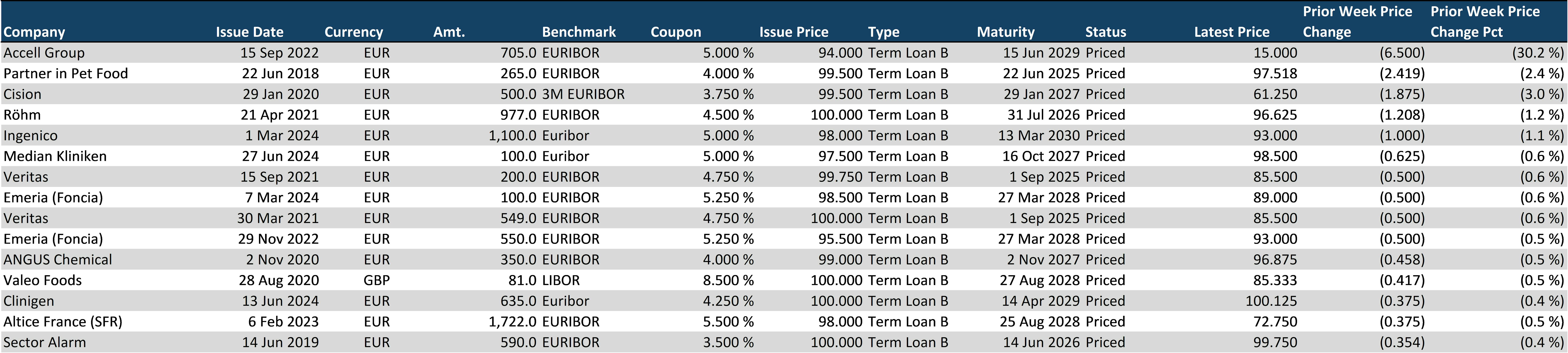
Accell — Last week 9fin reported that someone made a €1m bid at 29.5 on the Netherlands-based bike manufacturer’s TLB followed up by another in the mid-teens. This was unexpected given that sponsor KKR has in place strict whitelist restrictions on distressed funds holding that loan. The bid was considered low and did not trade as KKR has a final say. Nevertheless, it sparked speculations as to the identity of the bidder and concerns they are following a similar playbook to the low bids for Genesis Care last year, who ultimately was fell into restructuring.
Intrum — Distressed debt purchaser and servicer Intrum announced on Thursday that it has entered into a lock-up agreement with noteholders holding more than 50.1% of its SUNs and MTNs due 2025-2028. The agreement follows broadly similar terms to those in the initial proposal and is sponsored by the cross-holder ad hoc group of creditors, representing notes maturing in 2025 and beyond.
Medical Properties Trust — The US REIT MPT and its debtors are in the middle of mediation around asset sale proceeds and if their Steward leases are truly secured. This is complicated by unfavourable news about Steward Health which is inextricably bound together with MPT. MPT is both its landlord (Steward is leasing 30 hospitals under two master leases) and a lender (Steward received a number of loans from MPT before and during its bankruptcy). Steward delayed its hospital sale auction.
OQ Chemicals — The German chemicals company elected to miss an interest payment in April (even through it had the cash). This sparked talks with its lender who, as 9fin revealed this week, agreed to provide a €75m bridge facility and extend its debt (RCF by three months and TLB by two years). This buys time to find a buyer for the business to ensure par recoveries, failing which the lenders will take control over the company.
Peach Property Group — The German RE group is potentially gearing up for a A&E, and will court investors at a non-deal road show later this month. Peach Property faces a €594m maturity wall in 2025 (SUNs, mortgage mortgage debt and schuldschein). Absent an A&E, it might have to explore other options such as disposals, new secured debt and further equity to deal with the bond and schuldschein maturity.
Weekly Declines
Top bond movers (link to full screener)
Top loan movers (link to full screener)