Indian companies have sharply curtailed their issuance of US dollar bonds so far this year, as elevated hedging costs and persistently high global interest rates undermine the appeal of offshore funding.
Issuers have raised just $2.2bn through dollar-denominated bonds in the first five months of the year, the weakest January-through-May period in at least a decade, according to data compiled by 9fin. This compares with $4.49bn in the same period in 2025 and a peak of $9.59bn in 2021, when global liquidity was abundant.
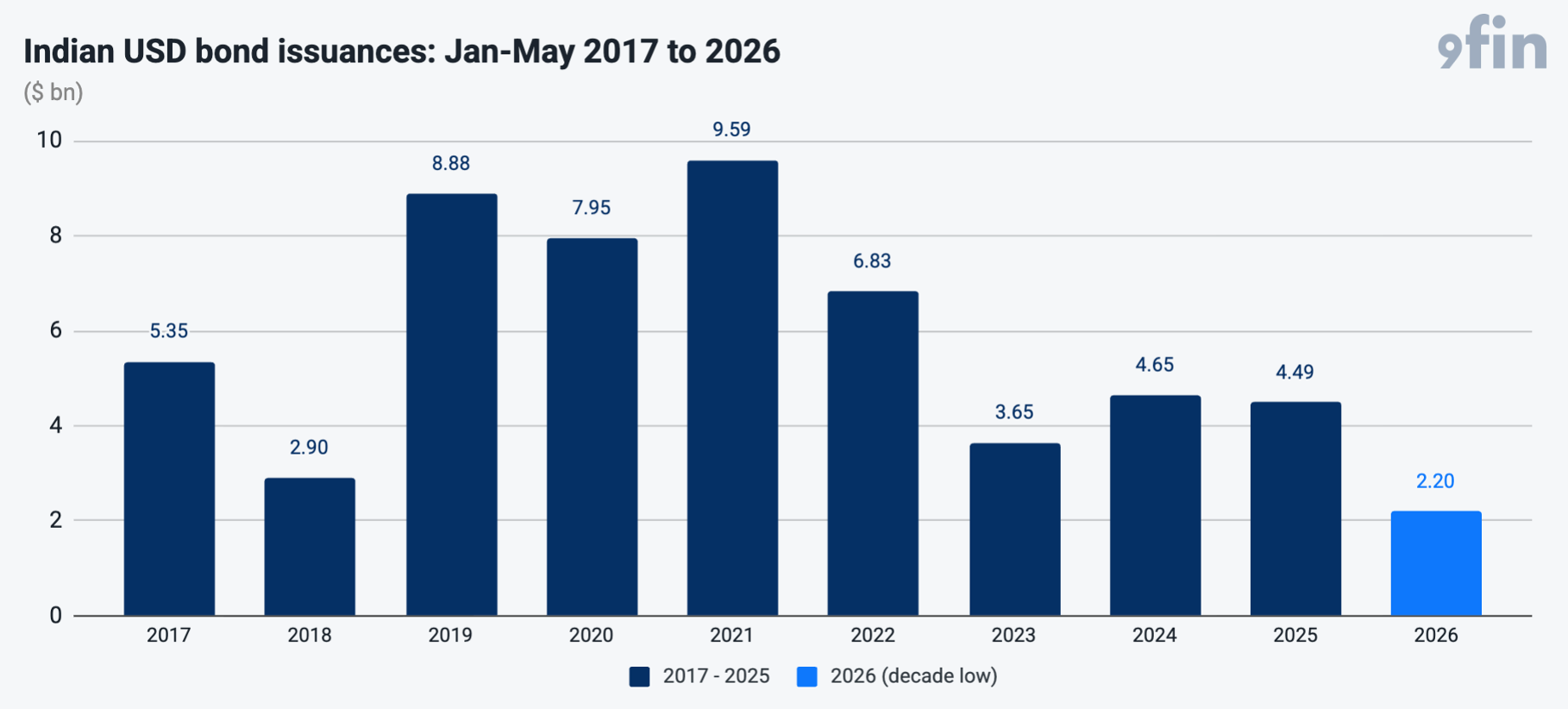
Source: 9fin data
The slowdown is not limited to deal size alone. Just four transactions have been priced so far this year, down from nine last year and nineteen in 2021, suggesting a broad-based retreat by Indian borrowers from international debt markets.
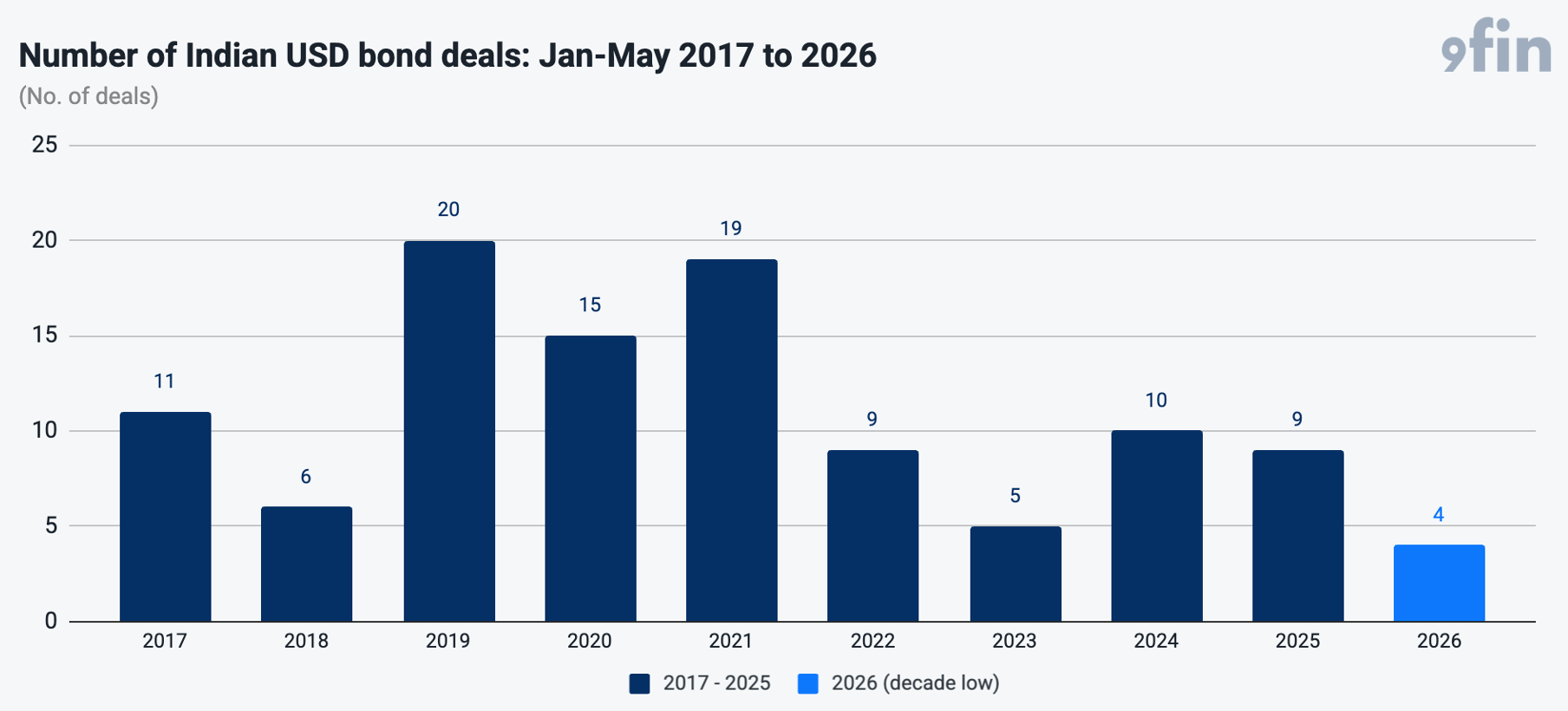
Source: 9fin data
At the heart of the decline is a sharp increase in the cost of hedging currency risk. Since the Reserve Bank of India stepped in to support the rupee, hedging costs have risen to 3%-4%, from a typical 2%-3% range earlier. For issuers with predominantly rupee-denominated revenues, this has pushed the all-in cost of dollar borrowing above comparable domestic funding options.
“The slowdown in dollar bond issuance isn’t a reflection of deteriorating credit quality — it’s a confluence of unfavorable economics,” said Venkatakrishnan Srinivasan, founder and managing partner at Rockfort Fincap. Srinivasan cited high US Treasury yields, wider credit spreads and punitive hedging costs.
Several borrowers have already deferred plans to tap offshore markets. Non-bank lender IIFL Finance postponed a dollar bond issuance, while Capri Global is yet to proceed with a proposed debut transaction. And conglomerate Shapoorji Pallonji Group has sought a maturity extension on existing debt as volatility and funding costs complicate refinancing efforts.
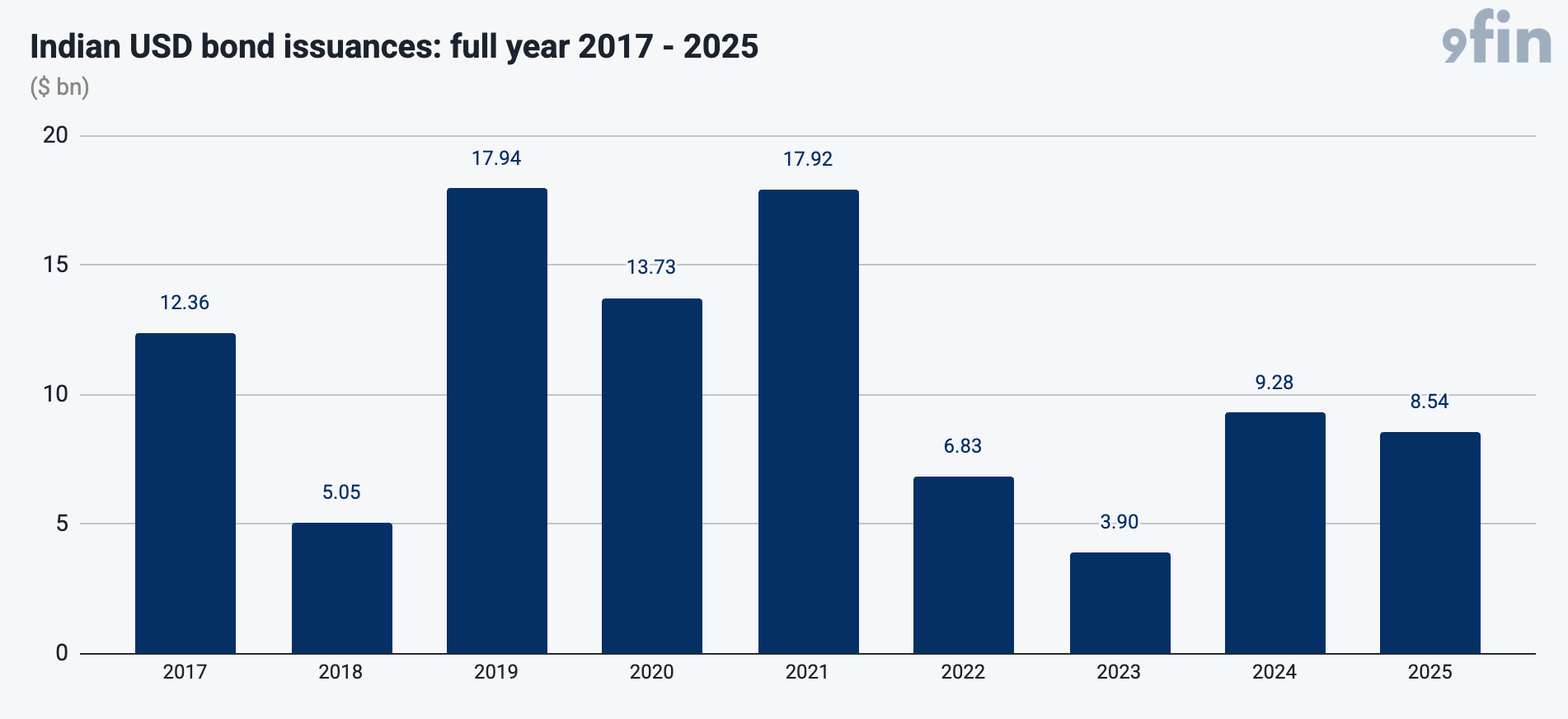
Source: 9fin data
This year’s retrenchment is a stark reversal from previous years when the cost of borrowing was cheaper. During that time, Indian issuers were among the most active in Asian credit markets — in both 2019 and 2021 for example, companies raised almost $18bn.
Issuance began to slow in 2022 as the US Federal Reserve embarked on an aggressive rate-hiking cycle. While volumes have since somewhat stabilized, this year’s renewed decline underscores the sensitivity of Indian borrowers to global funding conditions.
Unless US yields ease, the rupee stabilizes and hedging costs fall, bankers say Indian companies are likely to remain cautious, favoring domestic markets over offshore issuance for the foreseeable future.