A gambler on a losing streak, always wants just one more roll of the dice.
As we outlined in our Groupe Casino Webinar, yesterday pm, Jean-Charles Nauori, CEO, Chairman and ultimate owner, is making an interesting bet. Unable to checkout at OpCo and dividend blocked from upstreaming his cash pot to his HoldCo, Naouri wants to place the French Retail assets into a JV siting outside the restricted group, gambling that it will be a profitable 7-11.

Are the dice loaded in his favour? Are there rules loophole in the debt docs? Bondholders fear so, the bonds have collapsed 20-30 points since he first rolled the dice.
But he is not the only shooter — Daniel Křetínský, the second largest shareholder, also wants a seat at the table, and on Monday said he will bet the stores to the tune of €1.1bn, but only if the unsecured bonds suffered significant losses. Holy Craps.
It appears that Křetínský made his offer in reaction to the proposed tie-up with Teract. Another player upping the ante could increase the pot, but bondholders are wary, given Casino has said:
“As the completion of these transactions may require the approval of certain of Casino Group’s creditors, Casino Group is considering the possibility of requesting the appointment of conciliateurs in order to provide a framework for such discussions, which requires the agreement of certain bank creditors and bondholders.”
So, on Monday, Casino launched a consent request from certain bondholders (Quatrim 24s, 26/27 SUNs) to waive the event of default under those notes if the company was to enter a conciliation process. The consent solicitations will expire on 19 May 2023.
As we outline in our webinar, the introduction of conciliation into this high-stakes game may complicate matters for Naouri given likely conflict of interests. It raises concerns that as a large employer in France, the situation, as alleged happened in Orpea, could get highly politicised.
Creditor groups are starting to form. With a complex group and financial structure, there is plenty of room for various stakeholders to seek to improve their odds. For example, as we revealed last week, the 26//27 SUNs are seeking elevation to gain consent. We also note the presence of at least two distressed players in the RCF, where the docs dividend blocker to Rallye resides.
Our piece from earlier this week, and the webinar are 9fin’s opening gambits. There will be a lot to play for in the coming weeks and months, and our aim is to pick the winners and losers.
3 out of 9 Lives
Unlike in Casino, Adler Group is claiming its bondholders can come out even, projecting par recoveries under its UK Restructuring Plan. We and many others are highly skeptical of their BCG model that claims they can recoup their initial stakes — this appears a long-shot — with bond prices even after its approval, still languishing in the 20s and 30s.
We’ve spent a lot of column inches on the issues discussed during the Sanction Hearing, so won’t bore you with them again in the Workout, but significant court time was spent arguing over the projected valuations of its yielding and development assets. On Tuesday, we got to hear at first hand about Adler’s views on property values with the release of their unaudited FY22 numbers — can you believe its almost one year since the KPMG auditor resignation debacle?
Stefan Kirsten, Adler’s Chairman, is not afraid of a metaphor or two. He said his focus was stabilise Adler in a perfect storm. But even now “the company is certainly not sailing again in the best weather. But in unchanged rough seas, we have stabilised the ship”.
But the ship was close to sinking a number of times, and mixing metaphors, Kirsten said a cat famously has nine lives — with Adler having obviously more than three — the company avoiding “a threatening insolvency” on 30 April 2022 (on non production of audited accounts), on 25 November (Consus subsidiary convert maturity) and on 27 April 2023 (Adler RE bonds maturity).

His ire during Tuesday’s call was directed at a group of minority 2029 bondholders that opposed the restructuring, which he claimed had cost Adler an additional €35m in legal fees. Their buying into the debt at a discount was legitimate, but the board viewed the attempt to push the company towards insolvency as illegitimate, he said.
After the rant, the attention of the call turned back to the properties.
In Tuesday’s presentation Adler said that on a like-for-like basis, the fair value of the yielding portfolio had declined by 1.9% giving a gross asset value of €5.2bn. Encouragingly, vacancies remain low at 1.3% with rental income growing 1.5% on a like-for-like basis.
But given the differing views expressed during the Sanction Hearing on valuation, how does this compare to other German real estate peers?
LEG Immoblien saw a 4% fall in the second half, but a 1.9% increase overall. In its presentation the company added that potential valuation effects will only come through gradually over time based on methodology - with high uncertainty due to very low transaction activity.
On the call, Kirsten said CBRE’s methodology takes into account current market valuations, but cautioned the volume of large transactions is very low making it hard to find inputs.
The BCG model used by Adler to calculate recoveries under their restructuring plan was based on valuations given by CBRE and NAI Apollo in June 2022, to which it projected that property values in Germany would decline until the end of 2023 (with an average fall of 10%) and begin to recover in 2024, then growing at 3% annually.
But what about the more trickier development portfolio?
Knight Frank, which, prepared a valuation report for the 2029 AHG challenge, had valued eight of the 22 assets for a potential purchaser, and had marked them down by hefty 50%. Just two of the developments are completed and another two in “some stages of active construction”.
Adler revalued their development project value down from €2.4bn to €2.2bn in FY 22, attributing the €199m drop to the surge in interest rates. According to the presentation, two properties were sold in Q4 22, with another four at offers received/exclusivity stage (no further detail given).
Admittedly, some of the new money will go towards the underdeveloped development assets and their values should improve during construction. But if Adler follows its peer Vonovia and reassess the carrying values at accrued cost rather than estimated disposal prices, the valuations could take a hit (Vonovia reduced their values by €452m).
In responding to questions on which development assets would be sold first, Adler management said that projects under construction would be sold first as this will limit the additional capex spend. The company is opportunistic, being in contact with developers and investors, whom management said had shown great interest in their development portfolio.
Aggregate Demands
Just two days later, peer Aggregate Holdings took a much more negative view of its German RE development projects. And similar to Adler, it is seeking more time from bondholders “to allow it to continue construction of its assets to be able to realise the value of completed developments when the market normalises”.
The troubled German real estate company, struggling to rebuild its reputation after governance concerns, is seeking approval to uplift and defer coupons and relax and remove some covenants.
Under the proposal the Nov 25 SUNs coupon would be increased by 2.75% and deferred to maturity. The 65% Loan-To-Value (LTV) maintenance and the interest coverage covenants would be removed, with the definition of a material subsidiary changed to 20% of total assets from 10%.
The proposal for the 2024 notes is the same - a coupon uplift to 8.25%, but the maturity of the would also be extended until November 2025 from May 2024.
Aggregate says it expects its LTV to exceed 65%, due to declining property values:
“The consent solicitation proposal comes as a deterioration in the real estate sector has led to reduced appraised values for the companies investment properties and properties under construction, as well as a market that is not conducive to asset sales or refinancing’s at attractive levels”.
Fair enough.
But the LTV covenant reasons are somewhat misleading, we argue. The loss of VIC Properties Aggregate’s Portuguese property developer — soon to be handed over the convertible bondholders — is the main contributor to the jump, as €1.14bn of goodwill asset value will be lost (we’ve queried the inclusion of goodwill in this metric in the past).
As 9fin’s Emmet McNally notes in our analysis yesterday, the changes in material subsidiary definition also raises some questions. This may relate to developments at VIC, with the “sale” to close in Q2, or more worryingly, they may be trying “to adjust the definition to adjust the definition to either avoid triggering an EoD at another subsidiary or potentially begin some kind of liability management process at another asset”.
At the more granular project level, the latest update is worrisome. The company said the net value to flow up to bondholders from sale of its most important QH Track development “would be very limited”. This suggests that there is substantial secured debt sitting at QH Track.
The Fuerst redevelopment is progressing, but total capex needs have increased, and Aggregate said it “is currently in negotiations to extend and increase the financing so that the project is fully funded through to completion”.
Aggregate says liquidity is constrained, but adds it is in “constructive discussions to address existing or anticipated breaches of the terms of certain of its debt facilities, to achieve required amendments or waivers, as well as to resolve any existing issues”.
With the above in mind, why would a bondholder consent to removing some of their rights and triggers, especially with such skinny coupon uplifts? Admittedly it does avoid a potential near-term insolvency or event of default, and a potential liquidation sale, reducing recoveries.
In any event, 54.7% of eligible 2025 noteholders have already provided irrevocable commitments. This might reinforce market rumours on why holders are hard to find, the bonds were not widely circulated when initially placed. To pass, the threshold under the 2025 docs for a material amendment is 75% of participating voters (first vote subject to a 50% quorum). Just a simple majority of those participating is required, its odds-on the request will pass.
It is unclear whether Aggregate has cancelled the €220m of the €250m notional 2024 SUNs given to Vivion as part payment for Fuerst, and then exchanged for two Quartier Heidestrasse (QH) assets in September. We don’t know who owns the remaining €30m.
Schoeller Allibert — is the RentCo sale Pallet-able?
There is nothing that gets the blood pumping for a restructuring journalist more, than a going-concern opinion. Hat tip for 9fin’s Hazik Siddiqui for spotting it on pages 21-24 of Schoeller Allibert’s Q4 2022 report.
There is material uncertainty around the refinancing of their November 2024 notes and that this may cast ‘significant doubt’ on the company’s ability to continue as a going concern.
The Netherlands-based plastic pallets manufacturer has prepared a long term business plan (2023-2027), and is in the process of selecting a financial advisor(s). Options on the table include a new debt financing or “other form of liability management transaction”.
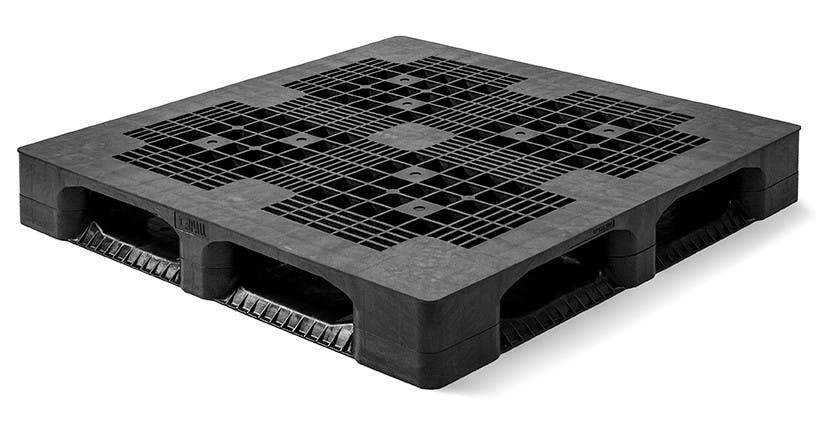
As Hazik outlines in his coverage (which is free to read here), bondholders will likely breathe a sigh of relief with a much needed cash boost finally reaching the Restricted Group. On 28 December 2022, the capex intensive rental business was sold to an unrestricted company subsidiary RentCo for €29.4m, resulting in a €18.5m cash contribution to the Restricted Group.
As 9fin reported, Schoeller Allibert’s financial deconsolidation plan separates the capex-intensive rental business, and places it outside of the Restricted Group into a new entity called RentCo. Capital investments for the ramp-up of the rental business were funded by sponsor Brookfield via shareholder loans.
RentCo has since received €18.5m from the unnamed 'external funding partner' to finance the acquisition of the rental assets. The remainder is from previously issued Brookfield shareholder loans — €9.2m of the total €20m is being shifted to RentCo — to buy asset assets from the manufacturing group.
We previously raised concerns over the sponsors’ commitment to the remainder of the business, and a refi looks tough. Volumes are down, and there is concern that IFCO, its largest customer (and an established competitor to RentCo) will not renew its contract which expires in November 2024.
The group is also on the hunt for another CEO, with Oliver Iltisberger stepping down from May 2023 due to ‘personal reasons’. He only joined in August 2022! Adrian Letts, MD at Brookfield, will take over the position as an interim CEO.
In Brief
It’s rare to see a private credit debt-for-equity swap out in the open. The English Scheme for Non-Standard Finance the UK-based consumer credit provider was convened this morning with 9fin in attendance. As reported, a portion of its secured debt provided by a group of investors led by Alcentra is set to be written-off in exchange for a minority equity stake.
For more on distressed private credit, see our Leaders in Private Credit Roundtable write-up.
Adler bondholders were refused permission to appeal by Justice Leech on Tuesday. No news yet on their application to the Court of Appeal. Our judgment write-up is available for 9fin clients.
Wepa’s rollercoaster year ended on a high (free to read here), and was less scary than feared, with strong end-of-year results driven by increased demand (back at pre Covid-19 levels) and cost pass throughs to customers. Time to remove from our Restructuring Tracker watchlist.
One out, one-in. Telecolumbus’ new management unveiled an earnings shocker after a number of revisions and heavy capex spend depressed EBITDA. 9fin’s Nathan Mitchell summarises the highlights (or should that be lowlights) of the webinar here.
Ghana, Get-on, Gabon. Tullow Oil is keen to reduce its reliance on its Ghanaian oil fields, and has announced that it is swapping Gabon assets with Perenco, which the E&P company says will simplify its equity ownership in key fields in the West African country. The cashless asset swap is a neutral transaction and doesn’t require shareholder approval.
What we are reading/watching this week
I’m still getting over losing on penalties to Manchester United. Solly March, a local boy from Hailsham, was distraught.
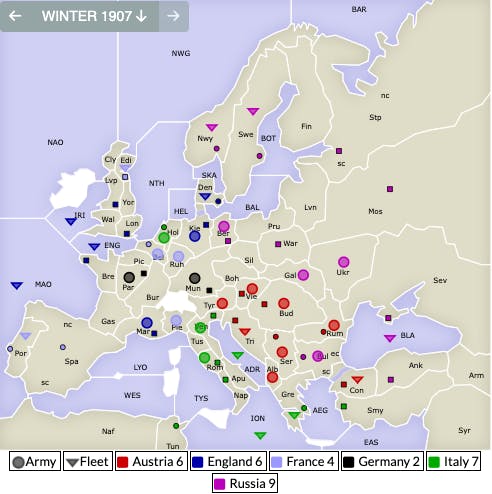
But Brighton’s FA Cup semi wasn’t the only important game last weekend. I was with the London Diplomacy club last weekend for an intriguing battle, in the boardroom of a mid-market PE fund overlooking the Strand.
For the uninitiated, Diplomacy is like Game of Risk but with negotiation and is highly strategic. I’m an inexperienced player and was a junior member of a two-man team, picking Italy (seen as one of the weaker countries). Our alliance with Austria took us far, but he (later found out he was the UK champion) stabbed us in 1905. We came a credible second with a late Holland supply centre.
Most of first half of my workweek was spent dissecting Justice Leech’s Adler judgment. The best lawyer write-up’s I’ve seen on this so far are Kirkland & Ellis’ here, and Linklaters, here.
With an avalanche of earnings, many of them stressed companies and in our Watchlist, a lot of time was spent looking at earnings presentations.
Our favourite moments are Versuini, the rebranded PDA (Philips Domestic Appliances):
The name Versuni puts a new spin on a powerful word — universe. At Versuni our universe is the home. We believe a home is more than four walls and a roof. It’s about having a place that you can truly call your own. Our name also speaks to the word universal.

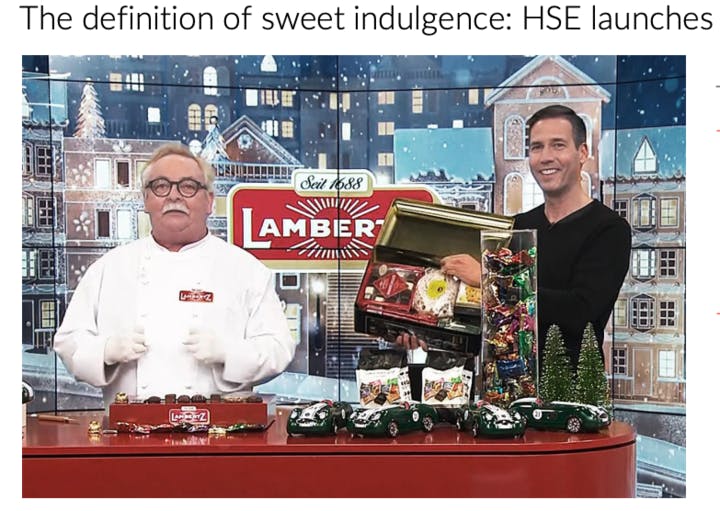
Be indulgent. Excellently produced slides from HSE — channeling the Muppet’s Swedish chef?
And finally, when you read a 9fin loan preview, agree with every word and then realise its you!