
Where a company chooses to file an in-court restructuring petition carries significant consequences. It determines who controls the restructuring process, how creditors are treated, what a restructuring plan must include, and whether it can bind dissenters. The choice of where to file has become increasingly strategic as cross-border comity tools allow companies to restructure in foreign jurisdictions and seek recognition in others.
This four-part series explores the dynamics of cross-border restructurings and examines differences across key jurisdictions where 9fin provides coverage: the United States, United Kingdom (England & Wales), Brazil, Mexico, Hong Kong, and the UAE.
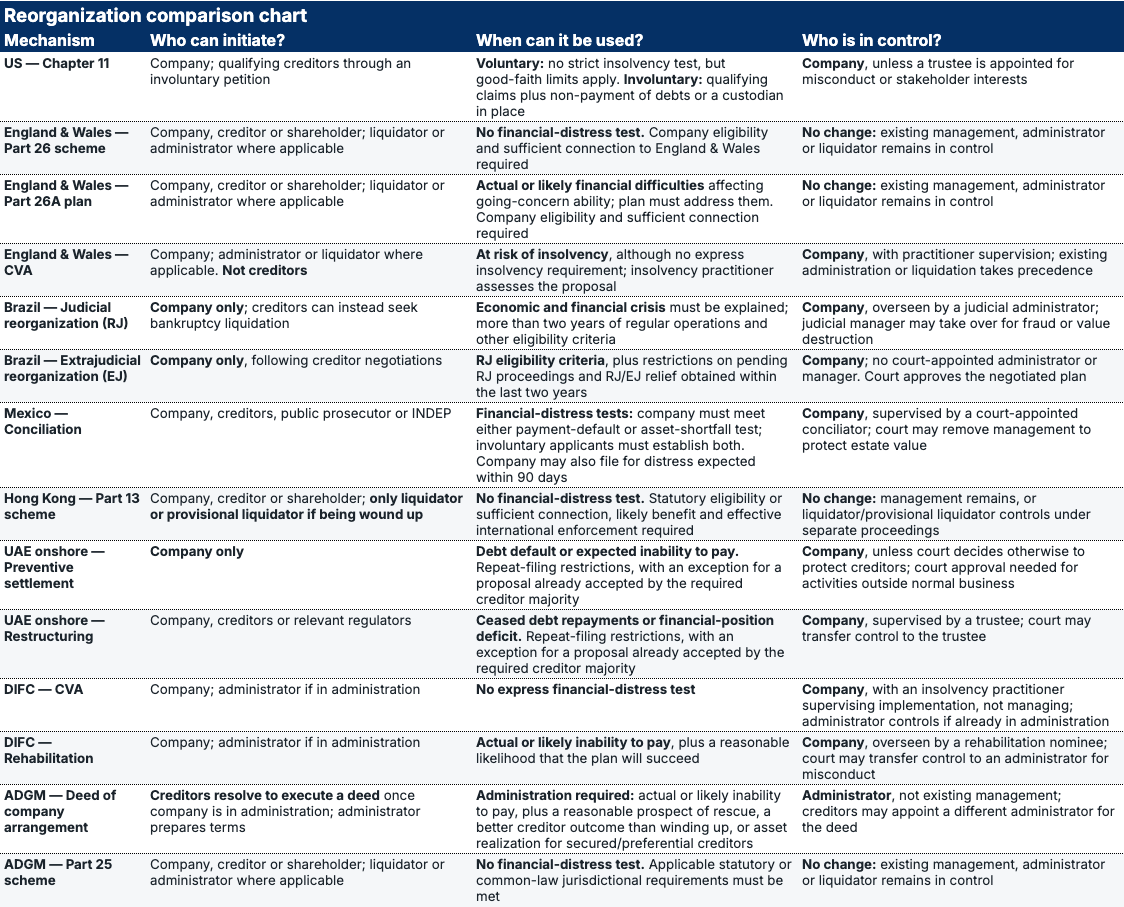
Part 1 starts from the beginning — who can initiate a restructuring, what conditions must be met, and who controls the company and process once proceedings begin.
Summary comparison chart
United States
Chapter 11 is the dominant corporate restructuring mechanism in the United States. One of its defining features is the debtor-in-possession model — the debtor generally continues its operations under its existing management team and the debtor's estate retains ownership over assets during the restructuring.
Comparatively, Chapter 11 affords a deferential stance towards the debtor company. The bar is lower for the company to voluntarily file for Chapter 11 itself than for its...